

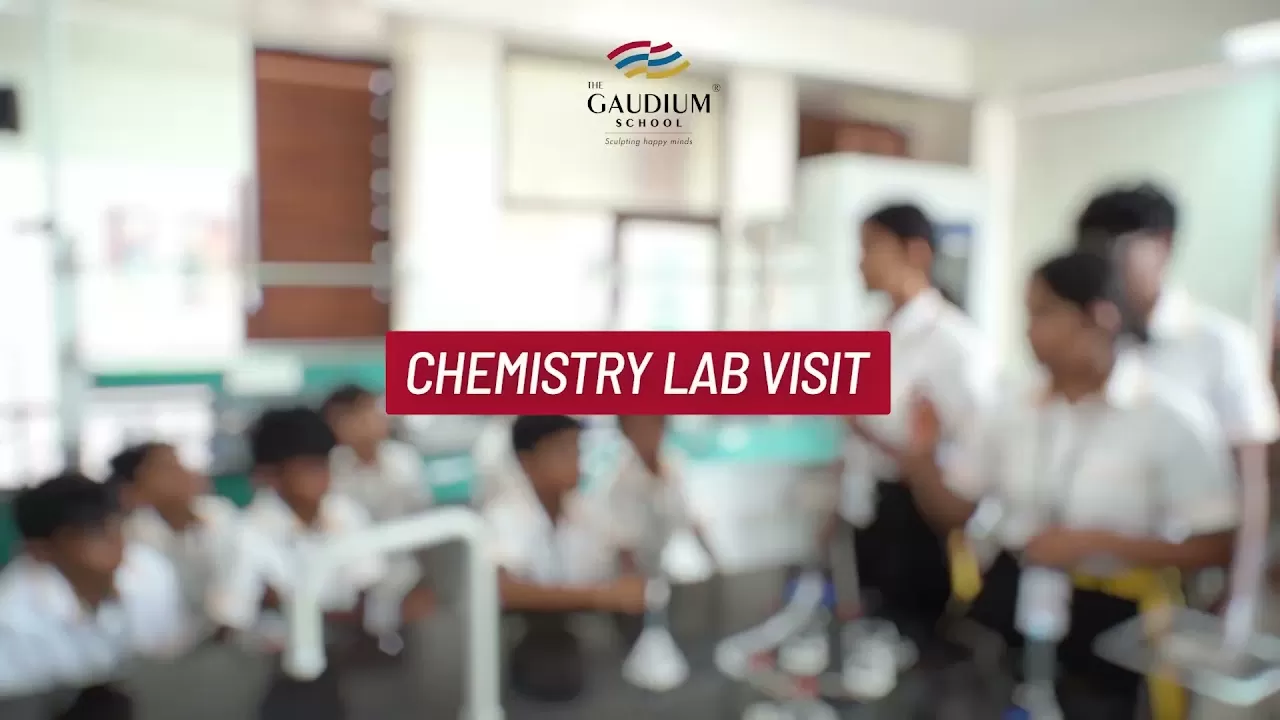
At Gaudium, we recognise that scientific literacy requires more than memorisation of concepts—it demands active engagement with phenomena. Our Chemistry Lab Visit exemplified this pedagogical principle: students moved beyond absorbing definitions of states of matter and changes of state to constructing genuine understanding through direct observation and experimentation.
The objective of this lab experience was deliberate. Rather than passive reception of information, students engaged in authentic scientific inquiry—observing carefully, framing questions, and analysing results. This methodology develops the habits of mind essential to scientific thinking: scepticism, precision, and logical reasoning. When a student observes a phase change firsthand and articulates why it occurs, they develop conceptual frameworks that endure far longer than rote learning.
The impact of such experiential learning extends beyond content mastery. Students cultivated confidence in their capacity to investigate unknown phenomena independently. They practised the vocabulary of science not through textbook exercises but through explaining their own observations—a far more robust pathway to fluency. This environment normalises intellectual risk-taking: asking questions becomes a strength, not a vulnerability.
The lab setting itself matters. It signals that understanding is provisional and evidence-based. Students learn that science is not a collection of received truths but an active process of testing, refining, and explaining. They discover that rigorous thinking has tangible outcomes—explanations that cohere, predictions that hold, results that replicate.
This is how science education at Gaudium operates: not as content delivery, but as the development of disciplined inquiry. When students experiment, investigate, and articulate their findings, science transforms from an abstract subject into lived experience—one that shapes how they approach problems, evaluate claims, and engage with the world.