

Curiosity is the engine of childhood development; it is the “spark” that transforms a standard lesson into a lifelong passion. When we encourage children to ask “why” and “how” across various activities—whether they are coding a first program, planting a garden, or conducting a chemistry experiment—we are doing more than just delivering facts. We are teaching them to be active participants in the world. By stepping beyond the traditional classroom, students learn that the world is a laboratory waiting to be explored, and that their own questions are the most valuable tools they possess.
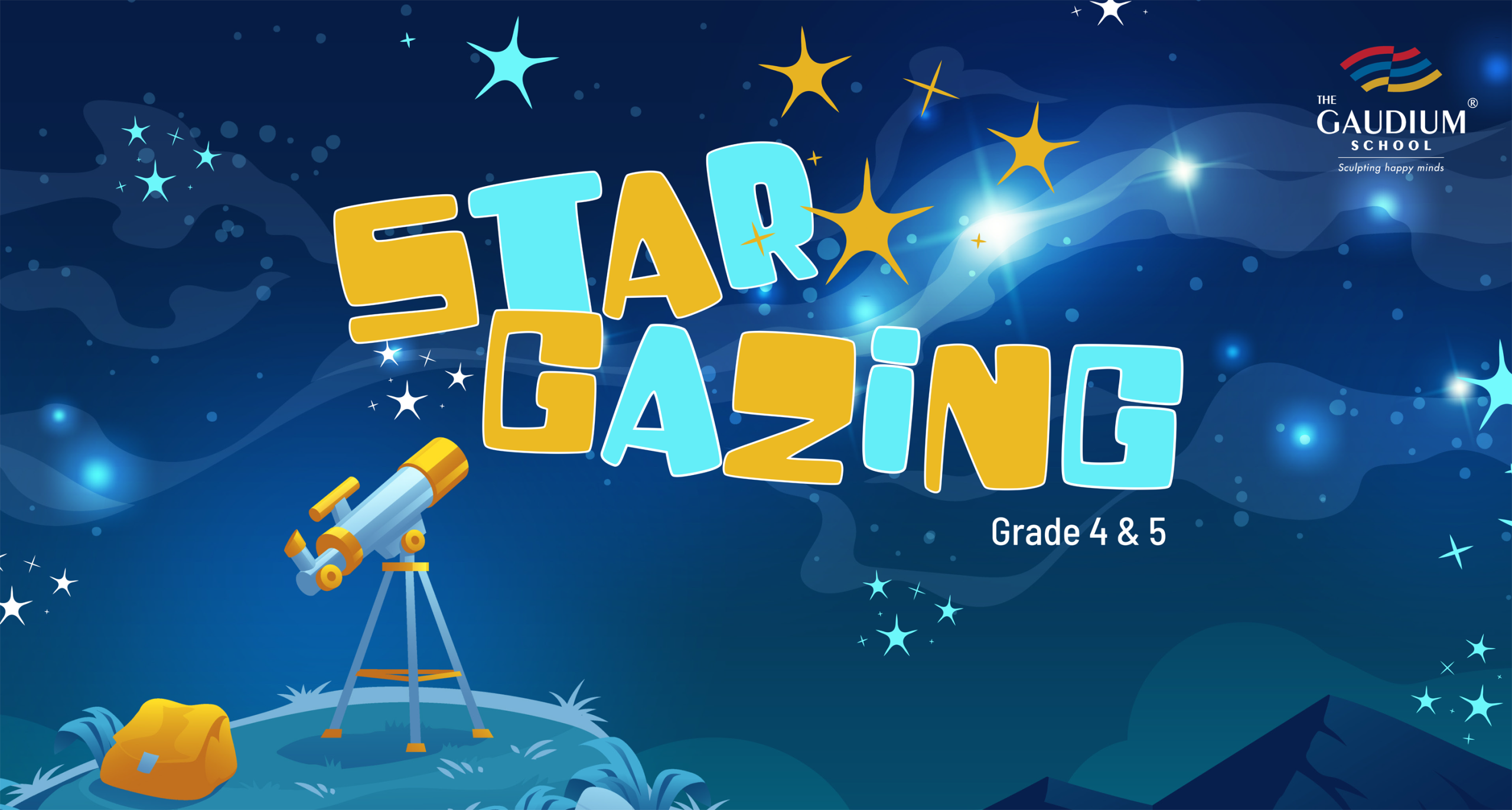
This spirit of discovery was front and center as our Grade 4 and 5 students recently enjoyed a truly unforgettable Stargazing Night hosted by NAVARS. The evening was a masterclass in experiential learning, filled with a palpable sense of wonder as students moved past their textbooks to engage directly with the mysteries of the universe. For these young learners, the transition from reading about space to actually witnessing it was a transformative moment, proving that the best way to ignite a mind is to provide a direct connection to the unknown.
Guided by astronomy experts, students and parents had the incredible opportunity to observe celestial objects through professional telescopes. As they peered through the lenses, distant, fuzzy points of light snapped into sharp focus, revealing planets, stars, and other fascinating sights. This hands-on interaction does more than just show them the sky; it teaches them the mechanics of observation.
As they gazed upward, they didn’t just see stars; they learned intriguing facts about constellations, the scale of space, and the vast cosmos that surrounds us, bridging the gap between abstract theory and breathtaking reality.
Stargazing, specifically, offers unique developmental benefits for children that extend far beyond science. It fosters a sense of “the big picture,” helping kids develop a healthy perspective on their place in the universe while encouraging environmental stewardship. Mentally, it builds patience and focus—two skills often challenged in our fast-paced digital age—as students must wait for the perfect alignment or a clear patch of sky to see a planet. Furthermore, mapping out constellations enhances spatial reasoning and geometry skills, proving that looking at the stars is as much a workout for the brain as it is a treat for the eyes.
The event created a perfect blend of learning, excitement, and family engagement, as parents joined their children in this journey of discovery. By involving the whole family, the night ensured that the “spark” of curiosity wouldn’t fade once the telescopes were packed away; instead, it sparked conversations that continued all the way home. It was truly a night of exploration and stellar memories that our students will cherish for a long time, leaving them with an ignited curiosity and a deeper appreciation for the wonders of astronomy that will follow them into their future academic careers.

Leave A Comment